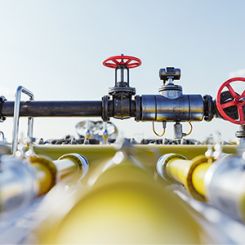

These pumps can be used for chemical dosing, gas turbine misting and fuel oil and lubricants.
Hydraulic Institute
12/15/2025


Rotodynamic pumps are the most common type used in power generating plants, but positive displacement pumps are used for certain applications. Most of the applications fall into auxiliary services and are not part of the primary steam cycle. The following is a nonexhaustive list:
- Chemical dosing: Reciprocating pumps are used for dosing chemicals. A specific reciprocating pump called a metering or dosing pump is used to inject precise amounts of chemicals, inhibitors or additives to maintain water chemistry. One key application of a chemical metering pump is delivering additives to control the emissions that occur. In natural-gas-fired, combined-cycle power plants, the combustion turbines produce comparatively low nitric oxide (NOx) and carbon dioxide (CO2) emissions. The heat recover steam generator (HRSG) then uses a scrubber system with metering pump to reduce the NOx further.
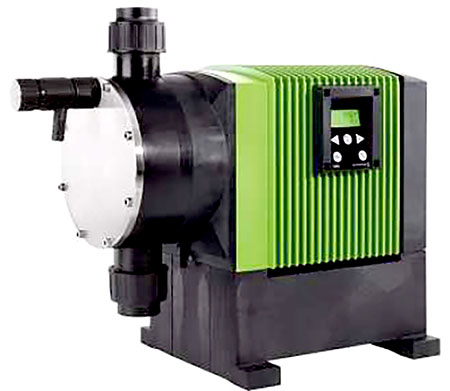
- Gas turbine misting: Reciprocating pumps are used to inject atomized water at the air inlet of a gas turbine to increase its efficiency and power output. These pumps are used for high-pressure requirement at a relatively low flow rate.
- Fuel oil and lubricants: Rotary screw, gear and vane pumps are often used for fuel oil or lubricant transfer. These pump types are utilized for handling viscous oils and the ability to inject precise amounts for combustion.
For more, refer to the Hydraulic Institute’s Power Plant Pumps: Guidelines for Application and Operation.
For more HI Pump FAQs, click here.