

A bearing is a load-carrying component that facilitates rotational motion in pumps. The load carrying capability of the bearing also limits motion in the radial and axial directions. Bearings are generally categorized into rolling element types and journal (sleeve) bearing types.
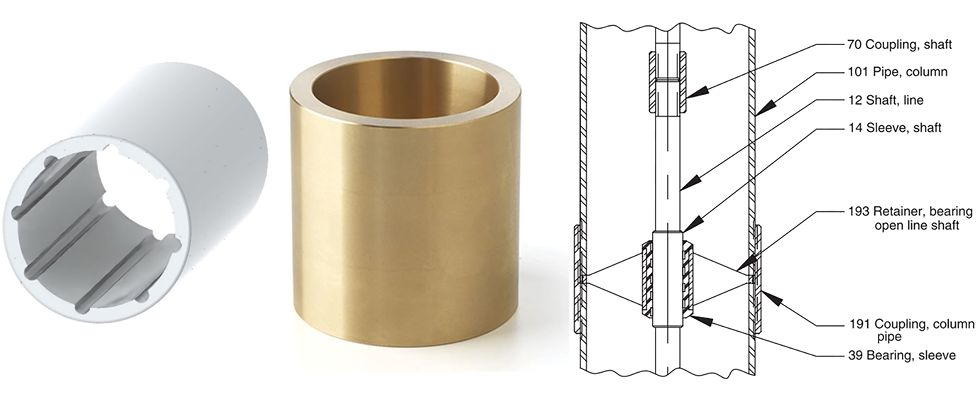
The term bushing is synonymous with a simple sleeve bearing. However, some bushings used in pumps are not specifically designed to carry loads, such as throttle bushings, which are designed to control flow or pressure. Sleeve bearings are either cylindrical bushings or are of a specifically designed geometry to achieve a stiffer hydrodynamic film to support the rotating pump shaft. Depending on the design and application, sleeve bearings can be lubricated by the pumped fluid with grease or with oil.
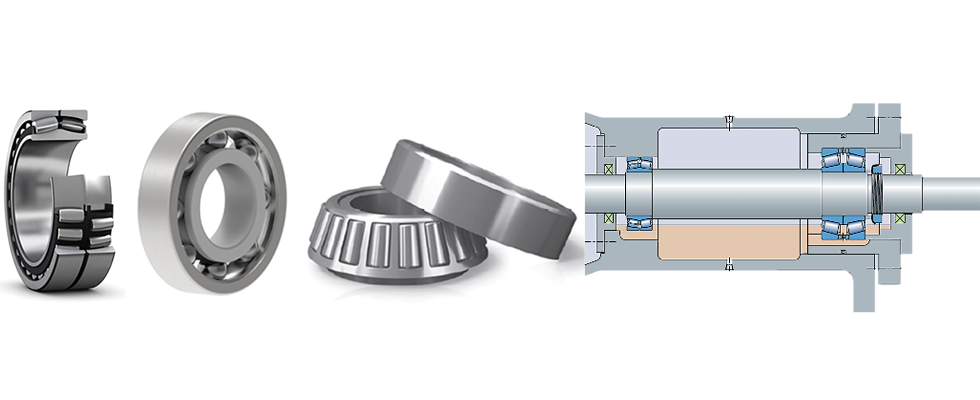
Rolling element bearings (Image 2) include balls or rollers between an inner and outer race. The inner race is in contact with the pump shaft, transmitting the loads from the pump to the rolling elements. These bearings are lubricated with oil or grease.
For additional information on pump bearings, refer to American National Standards Institute (ANSI)/HI 14.3 Rotodynamic Pumps for Design and Applications.