


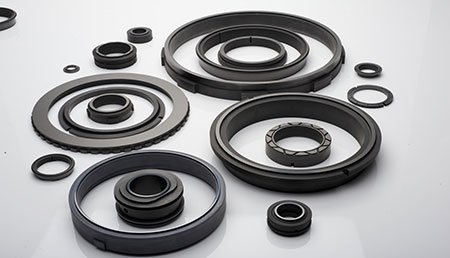
Blistering of carbon-graphite mechanical seal faces is a persistent issue in mechanical sealing technology. These blisters—raised, flake-like formations on the sealing surface—result from subsurface fractures that compromise sealing integrity. Their presence leads to increased leakage, elevated friction and premature seal failure, especially in the demanding service conditions mechanical seals can experience.
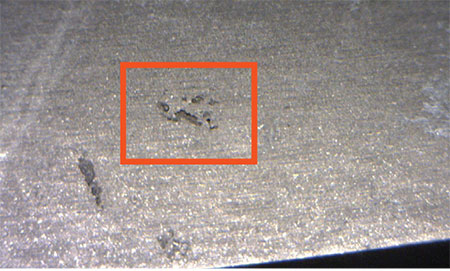
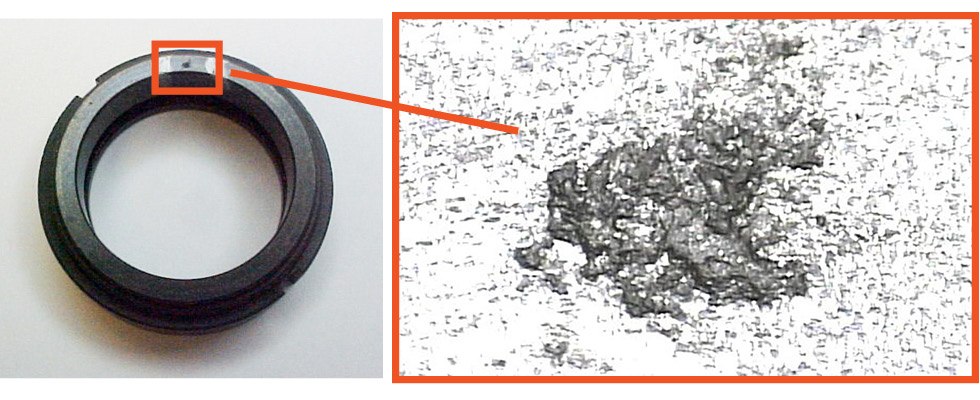
Blisters typically manifest by forming shiny, raised splotches on the sealing surface of the carbon. The blistering damage eventually progresses from raised splotches to a raised bubble surrounded by cracks. Eventually, this bubble fractures away, leaving behind a pit on the sealing surface. Understanding the mechanisms behind blister formation is essential for improving seal reliability and performance.
There are several key factors that contribute to blistering, including seal startup conditions, the process fluid’s properties and thermal cycling/transfer in the mechanical seal. Review of these conditions and fluid properties with the mechanical seal and carbon provider can help to mitigate blister formation in the mechanical seal system.
Startup Conditions
The most critical moment for blister formation is during startup with the initial rotation of the seal, where the breakaway torque—the force required to initiate rotation—is at its highest. During this time, shear forces acting on the sealing surface are at their peak due to thin fluid films and higher fluid viscosity, especially under cold conditions. These high shear stresses at the seal face can lead to microfractures in the carbon-graphite material, allowing blisters to form within seconds of startup.
Process Fluid Properties
The type and viscosity of the fluid between seal faces plays a pivotal role in blister formation. Fluids with higher viscosities increase shear forces during startup, while certain fluid chemistries exacerbate traction at the seal interface. In addition, carbon-graphite seals contain a degree of open porosity into which low-viscosity fluids can infiltrate. In the case of hydrocarbons, especially if heated to a point of criticality, the fluid can volatilize, turning to vapor, and expand.
This rapid expansion causes bubbling under the surface of the polished seal face, which will eventually lift and form a blister. The blister will ultimately degrade and fracture into a pit due to the increased friction and heat, causing additional fluid to volatilize, which causes even more blisters.
Thermal Cycling & Heat Generation
Thermal cycling, whether from process heat or frictional heating, contributes to blister growth and material deterioration. Once a blister forms, it creates a localized high-friction zone, which generates more heat and exacerbates the problem. Thermoelastic instability can cause localized hot spots, leading to differential expansion and crack propagation. Repeated start-stop cycles subject the seal face to abrupt temperature changes, promoting blister evolution.
Material selection plays a crucial role in blister resistance. Resin-impregnated carbon grades are more susceptible to blistering due to shrinkage during curing, which leaves residual porosity, and high thermal expansion, which amplifies blister growth at hot spots. Metal-impregnated grades, especially those with antimony, show better blister resistance. Antimony, widely used for seal face applications, expands upon solidification, counteracting shrinkage and minimizing porosity.
Mitigating Carbon Blistering
Given the multifactorial nature of blister formation, mitigation requires a comprehensive approach. Material selection is paramount; carbon-graphite grades that offer the lowest available porosity, provide good lubricity and have high thermal conductivities tend to fair better in applications prone to blistering.
Counter face material and design optimization is also essential. Faces that have high thermal conductivity, are in contact with large metallic components and are exposed to bulk volumes of process fluid can reduce the potential of localized heat buildup around the sealing interface. Thermal management will decrease the environmental factors that can propagate blistering in carbon-graphite, but fluid management is another critical factor. Evaluating the lubricating fluid’s traction behavior, not just viscosity, is essential during seal design and seal face material selection.
Operating protocols should aim to minimize breakaway torque through preheating systems, controlled acceleration and optimized lubrication. Seal face engineering also plays a role. Maintaining moderate surface roughness helps avoid thin fluid films between seal faces that favor blistering. Ensuring oil film distribution and uniform contact across the sealing interface will further reduce blistering risks.
Blistering on carbon mechanical seal faces is a complex but well-characterized phenomenon. It arises from mechanical fracture of the sealing interface due to high shear forces exacerbated during startup by fluid properties and thermal cycling. Through careful material selection, fluid and thermal management and operational controls, seal designers and engineers can reduce the risk of blister formation and extend seal life.
We invite your suggestions for article topics as well as questions on sealing issues so we can better respond to the needs of the industry. Please direct your suggestions and questions to sealingsensequestions@fluidsealing.com.
For more sealing sense articles, visit pumpsandsystems.com/tags/sealing-sense.