


Pump control is an essential element of fluid handling in municipal waterworks, industrial plants and energy infrastructure. The ability to start pumps safely, prevent reverse flow and minimize surge pressures directly influences system reliability, equipment longevity and operational safety. For decades, engineers relied on stored energy systems—hydraulic accumulators, pneumatic reservoirs or pressurized oil circuits—to achieve controlled opening, controlled closing and fail-safe shutoff. While effective, these methods introduced operational complexity, required frequent maintenance and posed environmental risks like fluid leakage, contamination and gas emissions.
Today, pump control has advanced beyond the need for stored energy systems. By pairing electric motor actuators with mechanical check valves, operators gain precise control and automatic fail safe protection. The result is a streamlined, maintenance-free solution that integrates seamlessly with modern control platforms.
The 3 Pillars of Pump Control
Every pump station must address three fundamental requirements:
1. Controlled opening ensures that flow begins gradually, preventing sudden velocity changes that can trigger water hammer.
2. Controlled closing allows valves to shut slowly, maintaining forward flow while avoiding abrupt stoppages that could cause backflow.
3. Finally, fail-safe shutoff guarantees that in the event of a power failure, the valve closes automatically to protect the system from uncontrolled reverse flow and damaging pump backspin.
Without these safeguards, pipelines and pumps are exposed to damaging hydraulic transients, cavitation and premature wear.
Traditional Stored Energy Systems
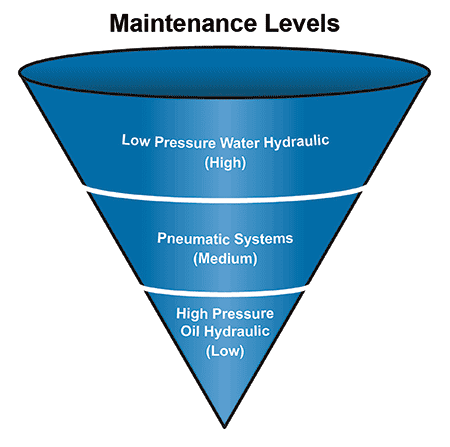
Achieving these functions has traditionally required stored energy. Low-pressure hydraulic systems have used water
pressure to actuate valves in smaller installations. High-pressure oil hydraulics provided precise control in large-scale industrial settings but can demand extensive servicing. Pneumatic systems have relied on compressed air reservoirs to drive actuators during outages.
Each of these solutions work, but they can come with trade-offs: accumulators and seals may need regular inspection, hydraulic fluids can pose contamination risks and compressed air systems consume energy and require monitoring. These all contribute to rising life cycle costs and growing maintenance concerns.
Mechanical Check Valves With Torque Unit & Electric Actuator
Modern pump control systems have eliminated reliance on stored energy mechanisms. Instead, these systems utilize an electric motor actuator to deliver precise torque and accurate valve positioning. This approach ensures controlled valve movement during normal operation under automated logic control.
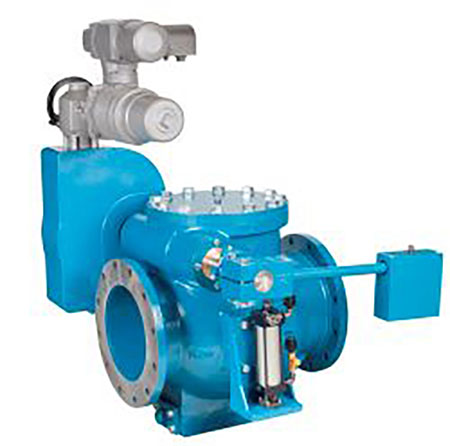
Traditionally, in the event of a power failure, valves remain in their last position, posing potential operational risks. The integration of a torque unit with a mechanical check valve addresses this limitation. The torque unit’s yoke configuration enables the valve to close automatically—mimicking the behavior of a conventional swing check valve—without requiring actuator input when power is lost.
This hybrid pump control valve design offers a fail-safe solution without the complexity of stored energy systems. This streamlined design reduces maintenance requirements, improves reliability and simplifies system design.
Control Logic & Integration
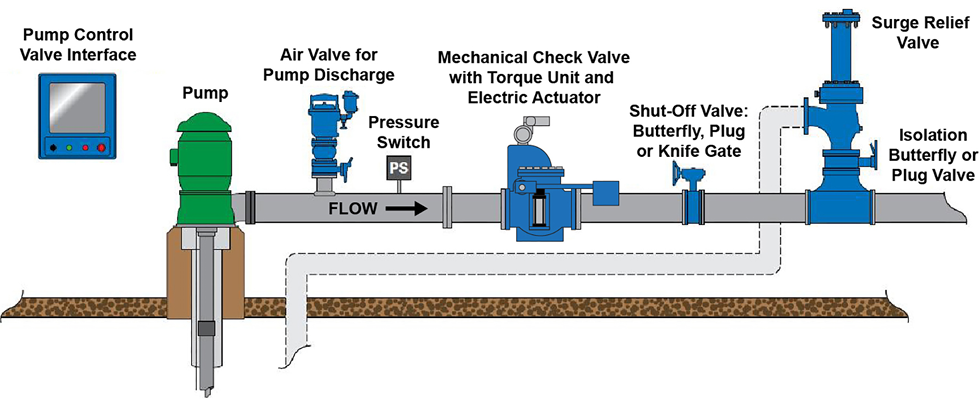
For pump control to function properly, coordination between the pump and pump control valve is essential. This is achieved through control logic, implemented either in local panels or integrated into supervisory control and data acquisition (SCADA) systems.
In a startup sequence, the valve begins closed to prevent premature flow. The pump is energized, building pressure against the closed valve. Once static head pressure is reached, a pressure switch signals the valve to begin opening. The valve then opens gradually, allowing flow to stabilize without surge. During normal shutdown, the valve begins closing while the pump continues running. As the valve approaches 95% closed, a limit switch signals the pump to shut off. The valve then completes closure, ensuring no fluid reversal. This sequence provides smooth transitions and protects the system from hydraulic shocks.
Surge Mitigation
Surge, defined as a rapid change in fluid velocity, is one of the most destructive occurrences in pumping systems. This condition can induce significant mechanical and hydraulic stresses, including pipe fatigue, impeller damage, excessive vibration and water hammer. These effects may escalate to pipeline failures, water loss and flooding. By extending the time over which velocity changes occur, controlled opening and closing mitigate surge pressures. An electric actuator pump control valve system is designed to ensure smooth transitions, eliminating abrupt hydraulic shocks and protecting both pipelines and pumps. Surge mitigation is not just about safety—it also extends equipment life and reduces maintenance costs.
Advantages of Modern Pump Control
Replacing stored energy systems with electric actuators and mechanical check valves can offer several advantages. Maintenance requirements are reduced, as there are no accumulators, hydraulic fluids or compressed air systems to service. Fail-safe reliability is inherent, since the mechanical check valve closes automatically during power failure. Integration flexibility allows compatibility with SCADA platforms and local control panels, enabling operators to monitor and adjust performance remotely. Cost efficiency improves through lower life cycle expenses, while environmental safety is enhanced by eliminating risks of hydraulic oil leaks or air contamination. Precision control is another benefit: Electric actuators provide accurate torque and positioning, allowing operators to fine-tune valve performance.
Electric Actuator Pump Control Valve
An electrically operated pump control valve system delivers controlled opening to prevent surge during startup, controlled closing to ensure smooth shutdown without backflow and fail-safe shutoff through mechanical closure during power failure. It requires no stored energy systems, and its electric motor operator provides programmable control, allowing integration with existing SCADA systems. For municipalities and industrial operators, this design offers full pump control capabilities with minimal maintenance overhead.
Applications Across Industries
Pump control valves are versatile and widely applicable. Municipal water systems benefit from reliable operation and seamless SCADA integration. Industrial cooling loops use them to prevent surge in high-volume circulation systems. Power generation facilities rely on them to ensure safe startup and shutdown of cooling pumps. Wastewater treatment plants utilize them to reduce maintenance costs and improve reliability. In each case, the combination of electric actuators and mechanical check valves provides an efficient and fail-safe solution tailored to contemporary infrastructure needs.
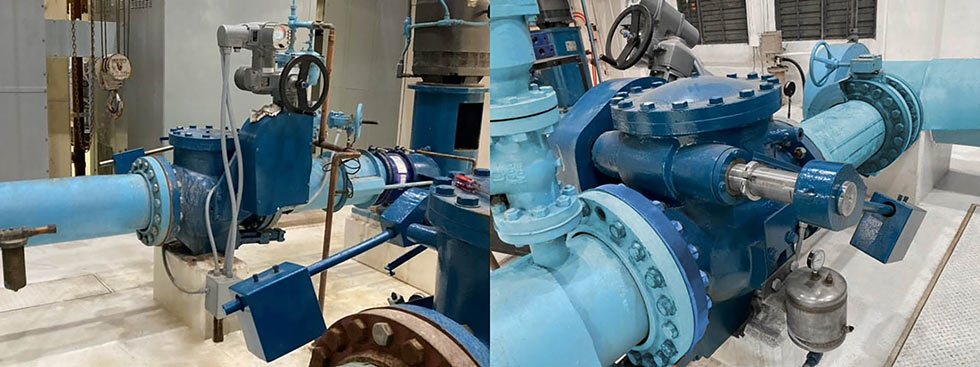
Pump control remains essential for safe, efficient and reliable fluid handling. The three pillars—controlled opening, controlled closing and fail-safe shutoff—must be achieved to protect equipment and infrastructure. While traditional hydraulic and pneumatic systems have long provided these functions, they can also have significant maintenance and life cycle costs. Electric motor actuators coupled with mechanical check valves offer a maintenance-free, reliable and integrated approach.
By leveraging smart control logic and SCADA compatibility, operators can achieve precise pump control, surge mitigation and fail-safe protection without the complexity of stored energy systems.