

Pump redundancy is essential for temporary wastewater bypass operations to avoid a disastrous outcome: a wastewater overflow that leads to fines, an expensive cleanup project and environmental contamination. Parallel pump configurations provide that redundancy and minimize the risk of system failure.
In a parallel pump system, the pumps share one common intake, and they discharge the fluid into one common header. A well-engineered system can boost efficiency and resiliency. It can also curb fuel consumption and reduce unnecessary wear on equipment. Yet too often, mistakes in design and operation threaten performance, leading to higher costs, breakdowns and environmental risk.
The following eight tips will help contractors optimize a parallel pump setup to deliver a successful outcome for project owners, potentially at lower cost.
1. Match Pump Curves in a Two-Pump System
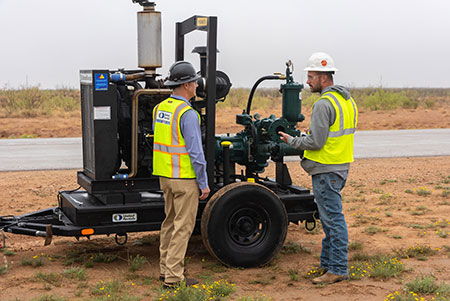
In a two-pump parallel configuration, it is critical to choose pumps with similar performance curves. Matching pump curves helps ensure the pumps share the flow evenly. When pumps are mismatched, the pump with the higher head does most of the work. That can reduce system efficiency, cause uneven wear and increase the risk of pump failure.
2. Consider a Multipump System for Variable Flows
Wastewater flows can fluctuate greatly based on time of day, weather conditions and other factors. Consider adding a third, larger pump as a backup pump for handling peak flows, including wet weather flows.
Adding a large backup pump allows contractors to use smaller pumps for average flows, which keeps energy and maintenance costs down. Automated float switches will engage the backup pump when needed, protecting the system from overload and providing redundancy if one of the primary pumps fails.
Using smaller pumps for average loads also reduces the risk of short cycling, which can occur when oversized pumps frequently turn on and off. Short cycling increases wear on internal pump parts such as seals and bearings and shortens maintenance intervals.
3. Calculate TDH Instead of Relying on Pump Curves Alone
Proper pump sizing begins with accurately calculating the total dynamic head (TDH) for each pump. This measurement is the sum of all pressure needed to move wastewater through the system and factors in suction lift, discharge elevation and pipe friction. Some contractors attempt to save time and money by skipping this step. They use whatever pumps they have on hand, choosing ones with the closest curves and hoping for the best. That approach can backfire, especially with larger, more complex systems, costing more money in the end.
Choosing pump sizes based on TDH benefits the entire bypass operation, driving increased efficiency and reducing the risk of system bottlenecks, mechanical failures and overflows. If pumps are too small, backups and spills can result. If pumps are too large, contractors will spend too much money on fuel. TDH calculations are important for another reason: Some contractors assume that adding a second pump will double the flow. It will not, due to additional friction loss.
4. Size Pumps for Lower RPMs
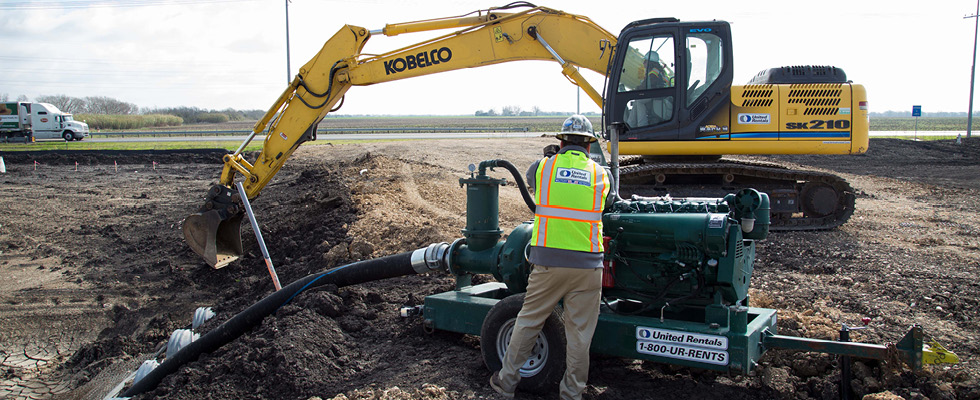
Size pumps so they do not need to continually run at full speed. Running pumps at maximum rotations per minute (rpm) may seem like a shortcut to increasing flow, but it often creates turbulence, which reduces the pipe flow rate and can damage equipment. In addition, pumps forced to run at full speed for extended periods are prone to short cycling.
Running pumps at a lower rpm is key to achieving laminar flow, which reduces friction losses. Laminar flow also conserves energy and minimizes wear on pipes and pump components. Adjust the rpm on parallel pumps to provide the desired TDH and discharge pressure. Keep the Reynolds number below the threshold for turbulence.
5. Pay Attention to Manifold Design
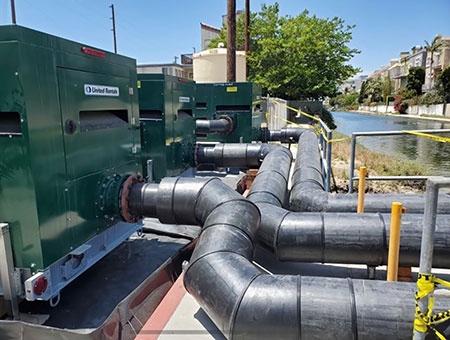
Manifolds perform a critical function and should not be an afterthought. A properly designed manifold effectively directs and controls the flow of wastewater through the system to maximize flow and prevent bottlenecks no matter which pump or pumps are operating. Gate valves installed in manifolds isolate pumps and prevent backflow when pumps cycle.
Avoid undersizing manifolds. Using suction or discharge headers that are too small can dramatically increase friction loss, reduce the flow rate and cause pump performance issues such as cavitation.
6. Distribute Run Hours Evenly
One common mistake is failing to alternate the pumps in a two-pump system. Contractors may keep one pump running continuously, “setting and forgetting” it until a problem occurs. Or they may switch the pumps over manually, but only when they remember to.
A better approach is to set up an automated system using float switches and telematics to run each pump for eight hours and then switch pumps. Maintenance can be performed on each pump as needed during offline hours to improve the overall reliability of the system.
Utilization reports and alerts from a cloud-based equipment monitoring platform can help contractors track pump utilization and address underutilization of one pump.
7. Balance Flow Sharing in a Multipump System
When two or more pumps operate at the same time, the flow should be distributed evenly to maintain system efficiency and reliability. If one pump carries more of the load, the system could underperform, and one pump could eventually fail due to overheating or cavitation. Each pump should run near its best efficiency point.
Calculating the TDH and choosing pumps with compatible curves are essential to balanced flow sharing, as is sizing manifolds properly. Another consideration is the placement of suction piping. When suction pipes are too close together, one pump will outperform the other. Determining the optimal distance between pipes helps them work together effectively.
Runtime meters and flow meters enable operators to confirm if the load is being shared as designed.
8. Seek Professional Help for Design & Monitoring
Designing a parallel pump system that delivers the desired results can be challenging. While small bypass systems may be easy enough to successfully design and install in house, larger and more complex systems usually benefit from the help of a turnkey service provider.
Professional engineering reduces the risks of mechanical failure, uneven flow and penalties for noncompliance. A reputable turnkey provider can also monitor pump performance 24/7 with the help of diagnostic alerts, troubleshoot issues such as uneven flow distribution, pump cavitation and equipment malfunctions and quickly adjust controls or components to resolve them.