


When making design decisions about a pump, there is always a give and take between the benefits the user expects to gain and the challenges inherent to that design. As the end user lives with those decisions, sometimes the drawbacks that had seemed a minor risk during the design stage can become cost and labor intensive. Maintenance schedules and annual budgets are built to accommodate shorter-than-normal maintenance cycles, so it is easy to become desensitized to the problem and treat the low mean-time-between-repair as routine. But taking a step back and rethinking the equipment design can result in innovative solutions that maintain the intent of the original design while addressing the issues that have reduced reliability and increased cost of ownership.
This was the path taken by one of the world’s largest oil production companies when reviewing in-line overhung (OH4) pumps installed in the hydro skimmer of one of their crude distillation units. These pumps had been operating for more than 28 years. Due to the older design and wear, they required frequent maintenance to ensure the pumps were operable. This maintenance drove up the cost of running the pumps through increased spare parts supply, labor hours and operational risk.
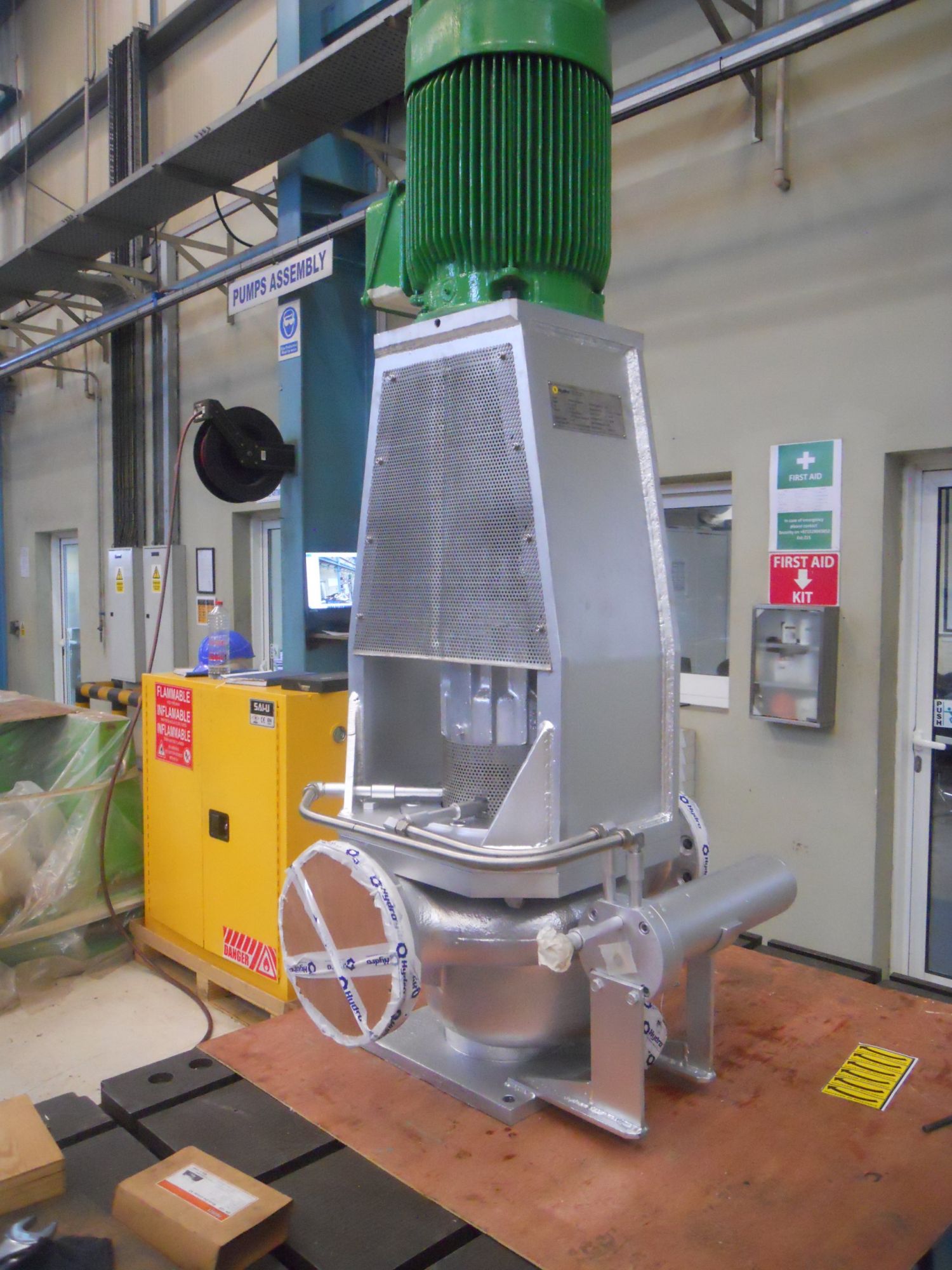
The oil company partnered with an independent aftermarket service provider to review the existing pump and provide an option that increased reliability, made routine maintenance less labor-intensive and fit into the existing footprint. The end result was a drop-in replacement that provided greater stiffness and reduced the resources necessary to dismantle, install and maintain the equipment.
Background
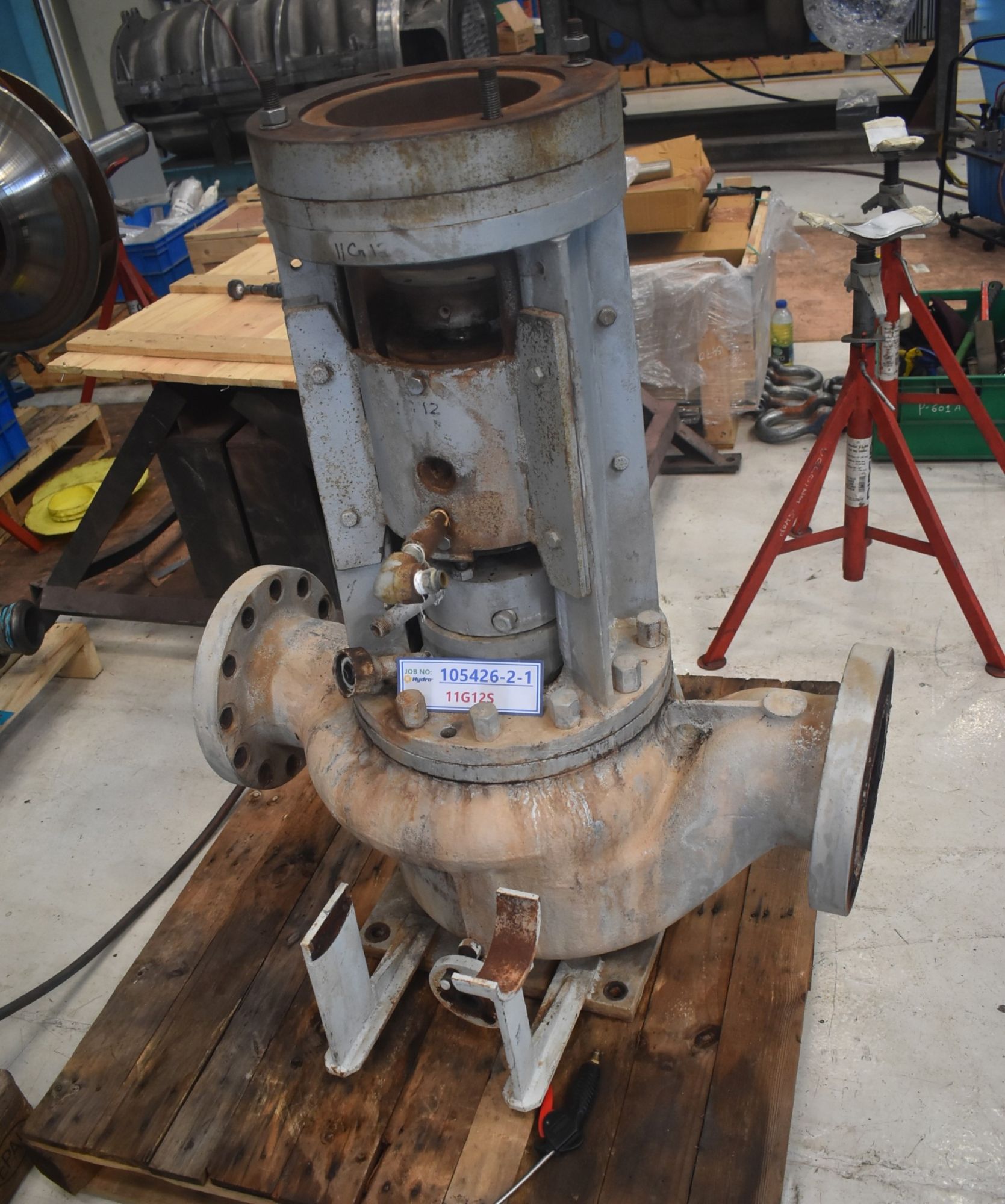
OH4 in-line process pumps are engineered to reliably withstand the high pressures and temperatures often found in the oil and gas and hydrocarbon industries with a compact, space-saving design. Their suction and discharge nozzles are an in-line configuration and are installed directly into the system piping. As with all overhung (OH) pump designs, the impellers are overhung from the bearings, which must support the rotating assembly and carry all loads, including the overhung mass and the rotordynamic and hydraulic forces. The OH4 pump uses a rigid coupling, with the motor mounted directly on the pump and the thrust bearing located in the motor.
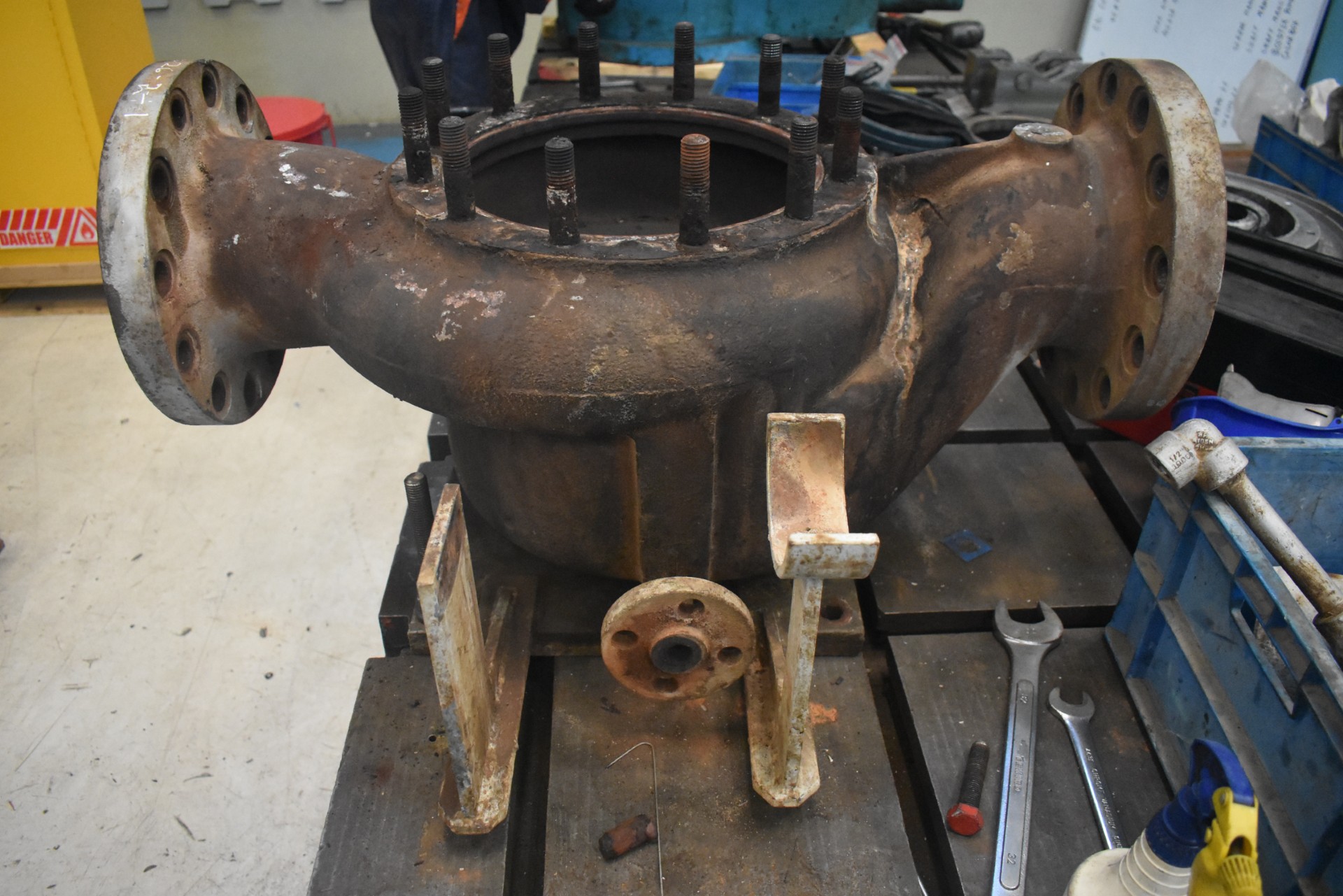
The main driver that was causing low reliability and availability of the oil company’s OH pumps was recurring bearing and seal failures, averaging several failures for each pump per year. The inherent design of the OH pump makes it resource-intensive to maintain and troubleshoot the problems with the bearings, as it requires removal of the motor to access them. The solution developed by the aftermarket service provider focused not only on improving bearing reliability, but on improving the maintainability of the bearing system by addressing this inaccessibility.
Solution Development
To understand the root cause of the recurring failures, the pumps were sent to the aftermarket service provider’s facility. The initial scope of work included a comprehensive pump inspection with nondestructive testing to understand the casing condition, along with a dimensional analysis of the internal parts. Through laser scanning, the parts were reverse engineered and 3D models were created; this information was used to assess existing design and begin the reengineering process. The redesign of the pump was achieved through collaboration between the local engineers and the aftermarket service provider’s global engineering division.
The solution that was developed updated the existing OH4 design to an American Petroleum Institute (API) OH3 design, which has a variety of operational benefits. In this design, the pump has its own thrust bearing to absorb the axial thrust instead of depending on the motor thrust bearing, which reduces the load on the motor bearings. By using a separate bearing bracket, bearing maintenance is possible without removal of the motor. To achieve this, the motor is mounted on a support and coupled to the pump with a flexible coupling in lieu of the rigid coupling inherent in the OH4 design.
The redesign also applied the concepts of an OH2 back pull-out (BPO) upgrade to the OH3 design. One key advantage of this upgrade is the ability to remove the bearing housing and impeller without disconnecting the pump casing. The other major benefit is a reduction in shaft deflection. Like a traditional OH2 BPO upgrade, this modification adhered to the latest API 610 standards, which require a larger radial and thrust bearing and a lower L3/D4 ratio. In the L3/D4 ratio, L is defined as the axial length from the radial bearing to the impeller centerline and D is the shaft diameter over this length. This ratio characterizes the shaft’s susceptibility to deflection, with a lower L3/D4 indicating greater stiffness. By increasing shaft stiffness and reducing deflection, both bearing and seal life are greatly improved.
Lastly, this upgrade allowed an improved mechanical seal chamber that could accept the latest API 682 standard, reducing fugitive emissions.
In total, five pumps from the crude distillation unit were upgraded to the new design and installed on-site. The existing casing, impeller and inducer were inspected and refurbished to best-in-class tolerances for reuse. The other components required for the upgrade, such as the bearing housing, motor support, shaft and bearings, were custom designed and manufactured by the aftermarket service provider.
Results
After a year of observation, the reliability of the five modified pumps had improved. The pumps were all functioning smoothly with no indications of bearing or seal issues. The last monitored data point showed the pumps were operating at low vibration and acceptable temperature levels (less than 115 F).
While the increased reliability has reduced the need for frequent maintenance of the equipment, the end user has gained versatility through the ability to replace the pump internals without removing the motor.
This upgrade was successfully executed while maintaining the same hydraulics and footprint as the original pump design. By keeping to the original footprint, no system piping modifications were necessary, which greatly reduced the project cost and timeline.