

Improper lubrication is responsible for up to 80% of bearing failures1, which are a leading cause of costly downtime, equipment damage and safety risks in process industries. Despite its critical importance, consistent lubrication remains one of the most difficult tasks to get right.
Today’s operations often involve hundreds of lubrication points, each with different requirements. Some are in hard-to-reach or hazardous areas. Increasingly lean teams maintain others. These overlapping challenges make it difficult to deliver the right amount of the right lubricant at the right time—every time.
Amid these challenges, process operators are taking a fresh look at automatic lubrication equipment. It reduces burdens on the workforce and can help make sure equipment is properly lubricated on time. And by more consistently lubricating equipment, operators can consistently maintain uptime.
Understanding Lubrication Challenges
Significant lubrication requirements combined with labor shortage challenges can result in process operations experiencing a variety of lubrication issues. These issues fall into three categories, each of which can undermine bearing life and equipment performance:
- Under-lubricating bearings can force an electric motor to work harder. This can lead to scratches and rust build-up on bearings and may eventually result in them seizing up.
- Over-lubricating bearings is wasteful, using unnecessary amounts of potentially costly lubricants. Excess material can also fall to the ground, creating safety hazards. It can lead to failures when bearings need to work harder to make a motion and create excess heat.
- Using the wrong lubricant can result in failures and other issues because bearings are not being lubricated to their specification.
In addition to these issues, manual lubrication can create other challenges, including safety risks for workers. For example, lubricating equipment with moving chains or conveyance mechanisms can create pinch-point and entanglement hazards. Additionally, lubrication work done in confined spaces or on ladders can require spotters, placing more demands on already constrained workforces.
Improper and inconsistent lubrication can also result in waste, such as scrapped products, overused lubricant and excess energy usage. These are losses that today’s cost-conscious and sustainability-minded organizations would like to avoid.
How Automation Helps
Automatic lubrication equipment removes the variability that can occur with manual lubrication and reduces workforce demand. The equipment automatically delivers lubricants in measured amounts and at controlled intervals to the points where it is needed.
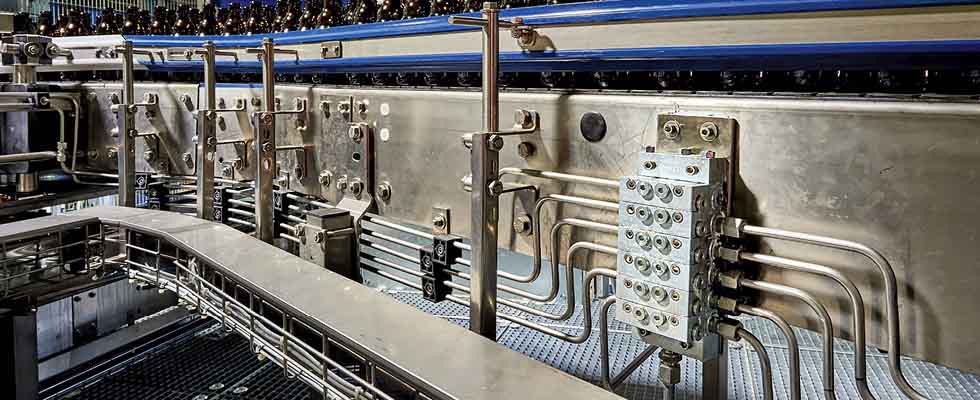
This automated approach can help process operations achieve the consistent lubrication of equipment that can be elusive with manual lubrication. Automation can be especially impactful in operations where teams are lean, assets run continuously across shifts and the cost of downtime is high. However, all process operations can realize key benefits from automated equipment lubrication, including:
- Improved reliability and uptime: Controlled delivery using automated equipment can help process operations avoid over- and under-lubricated equipment. This can help keep the equipment running optimally and reduce the risk of failures and costly downtime.
- Enhanced workforce efficiency and safety: Staff can focus on higher-value production needs, and the demand for employees with increasingly hard-to-find lubrication skills is reduced with automation. It can also enhance safety by reducing the need for staff to enter guarded areas to lubricate equipment, which in turn reduces the slip-hazard risks that result from over-lubrication.
- Reduced waste and energy usage: Minimizing over-application reduces wasted lubricant, and improved reliability can prevent unplanned stoppages that lead to scrapped products. Consistent lubrication can also keep equipment running optimally to reduce unnecessary energy consumption.
Equipment Overview & Design Considerations
Automatic lubrication equipment typically includes a central pump that replenishes lubricants in small, metered amounts. Lubricant then flows from the pump through divider valves or injectors for dispensing at the lubrication point/machine bearing. Divider valves and injectors each have their advantages. Divider valves tend to be used in applications where feedback and monitoring are highly important, while injectors are ideal for tighter spaces and adjustability.
Automatic lube controllers allow users to program lubrication cycles to meet the specific needs of their machines or equipment. Maintenance technicians can also use the controller to monitor the performance of the system as well as inspect and troubleshoot issues.
When deploying automated lubrication equipment in a process environment, a good practice is to locate the pump and controller interface in an accessible area, outside any hazardous zones. This enables employees to refill the pump and adjust control settings without being exposed to safety risks or needing to follow potentially time-consuming safety procedures.
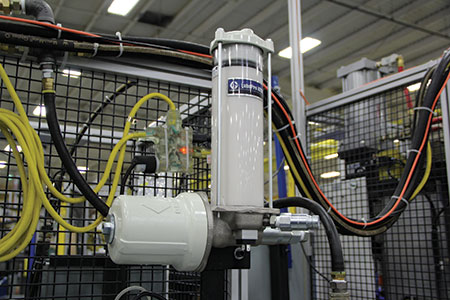
Reservoir size and lubricant turnover are also important considerations. Larger reservoirs may seem like an attractive option because they may reduce refill frequency. However, lubricants that are stored for too long can separate, impacting their performance. A practical rule of thumb is to size reservoirs for six months of use or 200 hours of service, whichever comes first.
Finally, it is important to consider environmental conditions. Dirty, wet or hot environments can introduce contamination risks for bearings. Because of this, automatic lubrication equipment should be designed to protect the bearing interface from contaminants. Some pumps, for example, are specifically designed to handle harsh conditions and changing temperatures.
Making Consistency the Standard
Consistency is what ultimately makes lubrication a routine task rather than a liability in process operations.
Even for operations that already use automated equipment, looking at the latest technology and upgrading existing systems can help achieve better consistency and overall performance. Modern automated lubrication equipment can provide greater levels of control and feedback than previous-generation technology, enabling operations to squeeze even more productivity and profitability from their equipment.
Whether a process operator is manually or automatically lubricating equipment, they should consider examining their critical assets to understand what challenges they face in delivering the right amount of the right lubricant at the right interval. When lubrication is done right, it becomes a driver of uptime, improved safety and waste reduction rather than a variability that risks eroding them.