

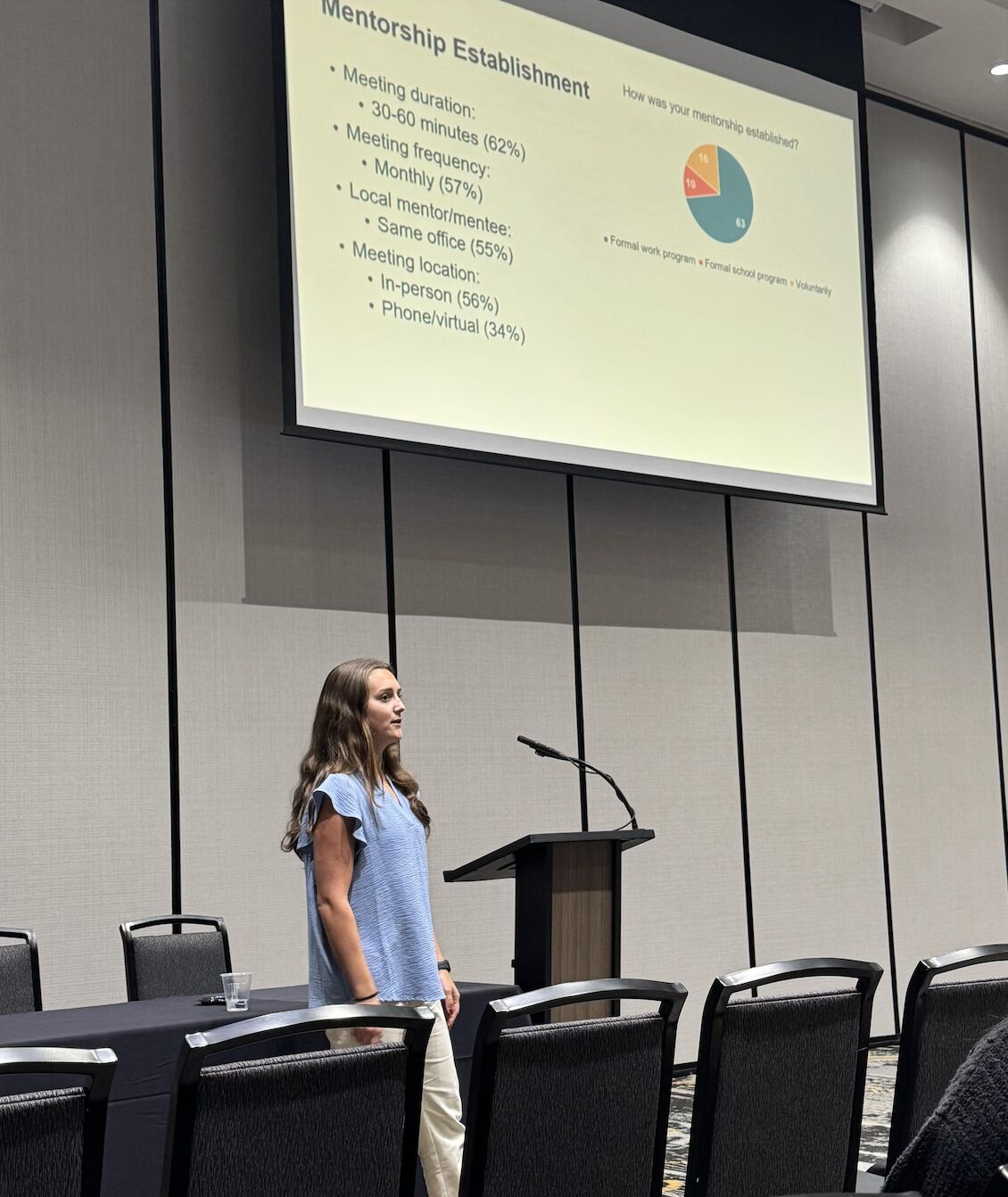
Nicole Martindale is a water/wastewater engineer at HDR in Omaha, Nebraska, and is a young professional (YP) in the industry. This month, we spoke with Martindale about surveys she has conducted with YPs in the water sector, focusing on what the results show about the impact mentorships and internships can have on those entering the workforce.
1. Tell us about the surveys you’ve been conducting in the industry and what led you to do them.
I conducted a series of surveys to investigate common trends in the origin stories of water industry YPs. Participants were surveyed to identify what influences YPs to join and continue working in the water industry. The survey results provide overarching takeaways and key action items that can ultimately be implemented to recruit and retain YPs. All levels and roles in the industry have the opportunity to impact the next generation of the workforce. Identifying the ways to maximize YP interest and engagement is crucial for mitigating future workforce challenges.
2. What are your key takeaways around mentorships/internships in the industry based on the results of the surveys?
Mentorship and internship experiences have the greatest impact on YPs, and how we design these experiences can impact their effectiveness. The survey results identified some potential best practices:
- Young professionals:
- Have a goal for the experience, even if the goal is developing informal connections
- Mentors and internship supervisors:
- Provide more opportunities and a variety of work (supervisors) and professional development (mentors)
- Encourage other employees to break off work for interns and serve as a mentor
- For everyone involved:
- Maintain frequent communication and check-in meetings
- Foster the establishment of personal connections
- Listen to the preferences of those involved in the connection (do not assume)
3. How have mentorships/internships impacted your own career in the industry?
My years as a YP in the water industry have had a profound impact on my perspective about water industry workforce issues. During my six years at Iowa State University, I was fortunate to have a wide range of hands-on experiences early in my career. As an undergraduate and graduate student in civil engineering, I completed several water/wastewater internships and had the valuable opportunity to work as a student operator for two years at the water treatment plant in Ames, Iowa. I also co-founded an American Water Works Association (AWWA) student chapter and currently serve as a member of the AWWA Young Professionals Committee (YPC). All these experiences have enabled me to develop a deep passion for water and understand the impact the industry has on the public at large; but what are others’ stories? What are the commonalities that have encouraged YPs to seek an occupation in water? Finding answers to these questions ultimately led me to the desire for conducting the surveys.
4. What are the challenges of creating/implementing a mentorship/internship program and how can companies overcome them?
For mentorship programs, maintaining consistent contact with a mentor and/or mentee and developing a cohesive meeting format are two major challenges identified in the surveys. According to the survey results, most mentorship connections only last about 1-2 years, which most likely aligns with the duration of a mentorship program. To develop lasting mentorship connections, it is crucial to establish an effective form of communication and be proactive about planning consistent meetings. Having an open discussion about desired meeting frequency, duration and preparation level for each meeting can help foster a strong connection from the start. When I meet with a mentor or mentee, I ensure our next meeting is on the calendar before we end the conversation.
For internship programs, one of the main challenges for employers is providing the intern a variety of work opportunities that also keep them engaged throughout the experience. Prior to the start date of an internship, it is crucial for supervisors to dedicate time to preparing a backlog of tasks so the intern can stay busy throughout the summer. Asking for other employees to break off tasks for the intern(s) can also help expand the range of project exposure, particularly hands-on opportunities that showcase what it would be like working full time in the water industry. During my first internship, I went on several wastewater and drinking water treatment plant tours and attended construction progress meetings. Seeing the fascinating water treatment processes in-person and meeting with the operators is what really kindled my interest in learning more about a career in the water industry.
5. What is your advice to young professionals entering the industry who may be considering an internship/mentorship?
As stated above, I highly encourage all young professionals to always have a goal and desired outcome for an internship or mentorship program. Developing a vision for what you want out of an experience can help you navigate through the opportunities that are presented to you. I also encourage young professionals to establish a strong network of mentors and individuals that can serve as a resource during their career journey. I am thankful for all the knowledge and advice that I have acquired over the years from a wide range of individuals both in and outside the water industry. They have supported me in reaching where I am today and inspire me to look forward to what the future holds.