

Aftermarket service should not be an afterthought. While most businesses focus on the price tag of a brand-new system, it is actually maintenance and service that can end up costing companies without a proper plan.
Equipment pumps, whether used in chemical processing, oil and gas, water treatment or food and beverage sectors, have made incredible progress over the decades, and many are lasting longer than ever before. But that means preventative maintenance is even more vital.
Having a plan for scheduled maintenance that proactively accounts for downtime is no longer optional. This planning should be a part of any smart business strategy. An optimized system affects everything from energy consumption and lifespan to safety and production output.
Three of the most significant elements in pump maintenance include health assessments, condition monitoring and spare part inventory. The considerations for each can vary depending on the operator and the system’s precise needs.
The Cost of Reactive Maintenance
Waiting for a failure to occur before addressing the issue—which is known as reactive maintenance—has a ripple effect, encompassing everything from unplanned downtime to plant safety to increased energy and repair costs. Improved materials and better design mean many pumps can now operate reliably for years beyond those of previous generations, but only with the proper maintenance.
Unplanned downtime is costly. Yet, it is an industry-wide problem. It is estimated that the world’s 500 biggest companies lose almost $1.4 trillion annually through unplanned downtime, equivalent to 11% of their revenues, according to a 2024 report by Siemens. Over time, factors such as corrosion and worn material can reduce a pump’s efficiency, leading to increased energy consumption and decreased performance.
Like all mechanical systems, pumps and their components experience wear and tear. Regular maintenance helps identify and address problems before they become serious, extending the pump’s life and minimizing unexpected failures.
When a pump goes down unexpectedly, the costs multiply:
- Lost production while equipment is offline
- Emergency repair labor, often at premium rates
- Expedited shipping for replacement parts
- Energy inefficiencies as damaged components continue to operate
- Safety and environmental risks tied to leaks or ruptures
One of the most immediate dangers of worn parts is the increased likelihood of leaks. Seals and gaskets, when compromised, allow fluids to escape from their intended pathways. For corrosive or toxic substances, leaks can lead to hazardous chemical exposure for workers, potential fires or explosions and contamination of the surrounding environment. These scenarios not only endanger personnel but also attract regulatory scrutiny and damage a company’s reputation. With reactive maintenance, downtime is no longer in the operator’s control.
Preventative Maintenance
Efficiency is a critical factor in any pumping system. Regular maintenance tasks like cleaning, realignment and inspection can restore a pump’s optimal performance, resulting in energy savings and improved overall system efficiency.
A properly maintained pump will use less electricity, produce more consistent output, lower emissions and improve a system’s overall health. An inefficient pump requires more energy to operate, resulting in higher energy costs. For example, if a pump has a low efficiency rating, it may need to run for longer periods or at a higher speed to deliver the same volume as a more efficient pump. Another option would be to adjust the pump’s stroke length to compensate for inefficiency. All increase the pump’s energy consumption, leading to higher energy bills.
Investing in pumps is a significant expenditure, so it is in businesses’ best interests to maximize their operational lifespans. Regular maintenance extends the life of pump systems. By replacing worn-out parts, cleaning components and addressing issues promptly, organizations can delay the need for costly replacements. This approach not only saves money in the long run but also ensures continuous and reliable operations.
Scheduled, preventative maintenance can improve:
- Longevity: Proactively addressing wear and tear to extend the pump’s operational lifespan
- Efficiency: Ensuring the pump operates at peak performance to minimize energy consumption and reduce the need for frequent repairs
- Safety: Identifying and fixing potential hazards like leaks or damaged components to protect personnel and the environment
- Reliability: Maintaining consistent operation to meet user needs, especially in industries where downtime is not an option
- Accuracy and precision: Ensuring pumps designed to dispense precise amounts of fluids or gases maintain their calibration and intended performance
Safety is paramount in any industrial or commercial setting. Pumps that handle hazardous substances or operate under high pressure have a higher potential for accidents if not properly maintained. Leaks, spills and other failures can pose health hazards, cause environmental damage and result in financial liabilities. Regular maintenance reduces the risk of unexpected malfunctions, minimizing the likelihood of hazardous situations. By addressing potential safety concerns through maintenance, organizations can maintain a safer work environment and comply with regulations more effectively.
Predictive Maintenance
While preventative maintenance relies on scheduled intervals, predictive maintenance takes the next step by continuously evaluating equipment condition. More data means more informed decisions.
Modern condition monitoring systems provide 24/7 insight into pump health, capturing data on vibration, temperature, pressure and performance trends. In addition, remote monitoring offers quicker, easier access to the data. When fault conditions arise, these systems can detect issues long before failure, enabling better planning.
For pump monitoring systems, sensor placement and calibration are critical and directly affect data quality. AI-based monitoring offers even more potential, especially in learning system baselines and identifying gradual issues.
The Right Parts for the Job
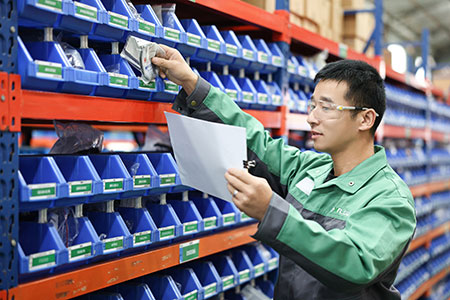
When the time comes, having the best aftermarket parts on hand gets a system up and running sooner. With essential spares on hand, repairs can happen immediately.
OEM parts are generally the best, most efficient replacement parts available. Unfortunately, installing a third-party aftermarket part in an existing system can void the warranty.
OEM parts are engineered to work seamlessly within the processes for which they were designed. Even the tiniest bit of lag or play can impact efficiency, pose a potential safety hazard for employees or cause a process line to go down until a proper replacement part is ordered and installed.
Reliable equipment manufacturers keep this in mind by maintaining a network of global partners with an inventory of genuine OEM spare parts available to ship as soon as possible. In an era of rising costs, tighter margins and longer life cycles, preventative maintenance can give businesses a powerful advantage for the future.