

Mechanical seal compression packing—particularly braided materials such as polytetrafluoroethylene (PTFE), graphite and aramid—is entering a new era shaped by regulatory pressure, material innovation and digital integration. This article will explore the evolving compliance landscape, emerging technologies in packing materials and strategic implications for manufacturers, engineers and end users in fluid sealing industries.
Compression packing remains a critical component in controlling leakage in rotating equipment across industries such as chemical processing, water treatment and power generation. As global regulations tighten and performance expectations rise, the sealing industry must adapt with smarter, safer and more sustainable solutions. Compression packing continues to offer distinct advantages including ease of installation, low cost and ability to perform in harsh service conditions.
Regulatory Landscape
Emission control standards
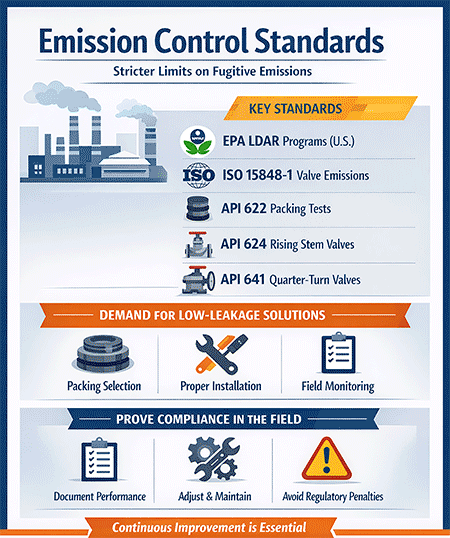
Regulatory bodies are enforcing stricter limits on fugitive emissions from valves, pumps and flanges. Key standards include:
- Environmental Protection Agency (EPA) leak detection and repair (LDAR) programs in the U.S.
- International Organization for Standardization (ISO) 15848-1: Measurement and classification of valve emissions
- American Petroleum Institute (API) 622: Type testing of packing for fugitive emissions
- API 624: Type testing of rising stem valves for fugitive emissions
- API 641: Type testing of quarter-turn valves for fugitive emissions
These standards are driving demand for low leakage packing materials and improved installation practices. Compliance expands beyond just standard laboratory qualification for the packing installed. End users are expected to demonstrate continuous field performance by documenting packing selection, installation procedure and adjustment procedures. Packing performance is essential, and failure to meet emissions requirements can result in regulatory penalties.
Material safety and disclosure
Manufacturers are increasingly required to disclose the chemical composition and safety data of packing materials, especially in food-grade, pharmaceutical and hazardous applications. Compliance with Registration, Evaluation, Authorization and Restriction of Chemicals (REACH) (EU) and Toxic Substances Control Act (TSCA) (U.S.) is essential for global market access.
Aside from regulatory compliance, transparency in material composition is becoming a competitive differentiator. End users expect safety data sheets (SDS), raw material traceability and absence of certain chemicals that may be plant restricted with a specific end user. It is crucial that suppliers manage their supply chains carefully to maintain an accessible database of information.
Global harmonization
International alignment of standards is underway, with ISO, American Society for Testing and Materials (ASTM) and API working toward unified performance benchmarks. This trend encourages the development of packing solutions that meet multijurisdictional requirements.
Material Innovation in Compression Packing
Braided PTFE and hybrid compositions
PTFE remains a preferred material for its chemical resistance and low friction. Innovations include:
- Hybrid braids combining PTFE with graphite, aramid or carbon fibers
- Low-friction coatings to reduce startup torque and extend service life
- Non-asbestos and biodegradable alternatives for environmental compliance
These constructions are engineered to improve emission/leakage control, reduce shaft wear and increase mean time before failure. Additionally, advances in braiding techniques and yarn fiber treatment have been used to improve resiliency and temperature cycling capabilities of the packing set.
Smart packing systems
While smart packing systems are still early in adoption, they have the potential to improve maintenance strategies by shifting from reactive adjustments to condition-based monitoring intervention. Plant management systems can be updated with these new technologies to detect abnormal leakage, thermal cycling and gland load. Emerging technologies include:
- Embedded sensors for real-time monitoring of seal integrity
- Radio frequency identification (RFID) tagging for traceability and life cycle documentation
- Digital twins for predictive modeling and maintenance planning
Market Outlook
According to industry forecasts:
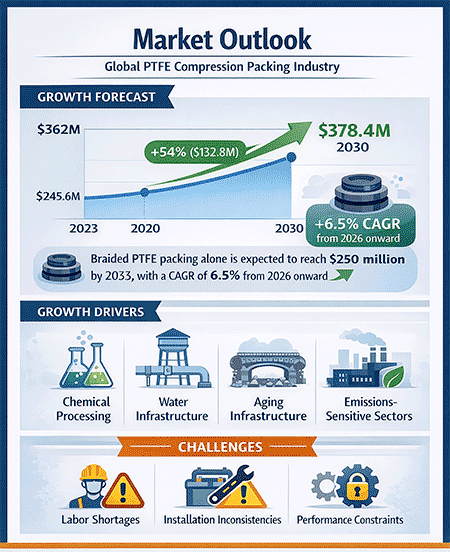
- The global PTFE compression packing market is projected to grow from $245.6 million in 2023 to $378.4 million by 2030.
- Braided PTFE packing alone is expected to reach $250 million by 2033, with a compound annual growth rate (CAGR) of 6.5% from 2026 onward.
Growth is driven by demand in chemical processing, water infrastructure, aging infrastructure and emissions-sensitive sectors. Labor shortages and inconsistent installation procedure practices across different plants remain constraints on the performance potential of compression packing solutions driving the market up.
Strategic Implications
To remain competitive and compliant, the sealing industry will need to:
- Invest in research and development (R&D) for hybrid and eco-friendly packing materials
- Adopt digital compliance tools for documentation and traceability
- Engage in standards development to influence realistic performance benchmarks
- Educate end users on proper installation and maintenance to maximize seal effectiveness
Training and access to information and knowledge is critical as maintenance personnel and tenured staff retire and a new workforce emerges. The Fluid Sealing Association is well positioned to lead these efforts through technical references and collaborative standards participation.
Compression packing will continue to play a vital role in industrial sealing applications worldwide. Innovation to adhere to regulatory and end user expectations constantly evolves compression packing technology, leading the path to more advanced solutions to improve reliability.
We invite your suggestions for article topics as well as questions on sealing issues so we can better respond to the needs of the industry. Please direct your suggestions and questions to sealingsensequestions@fluidsealing.com.
For more articles from the Fluid Sealing Association's Sealing Sense series, visit pumpsandsystems.com/tags/sealing-sense.
References
- Future Market Insights. “PTFE Compression Packing Market Outlook (2023 to 2033).”
- Market Research Intellect. “Global Braided PTFE Packing Market Forecast 2023–2033.”
- ISO 15848-1: “Industrial Valves – Measurement, Test and Qualification Procedures for Fugitive Emissions.”
- API Standard 622: “Type Testing of Process Valve Packing for Fugitive Emissions.”
- U.S. Environmental Protection Agency. “Leak Detection and Repair (LDAR) Requirements.”