

When the water slows to a trickle in a salmon-bearing stream, it is more than an environmental inconvenience—it is a threat to an entire ecosystem and a cultural tradition. And in Washington State, it is also a matter of federal law.
In 2013, a federal court ordered the state of Washington to repair or replace more than 1,000 roadway culverts that were blocking salmon from reaching their upstream spawning grounds. The decision came after 21 Native American tribes sued the state, arguing that the crumbling and undersized culverts violated their treaty rights by cutting off salmon migration routes.
The court’s mandate requires high-priority culverts to be fixed or replaced by 2030. However, since the original ruling, the scope and cost of the work have expanded dramatically. What sounded straightforward on paper quickly turned into one of the largest, costliest and most complex environmental infrastructure undertakings in the country.
- 2018 estimate: Approximately $1.88 billion total, with an average cost of $5 million per culvert
- 2025 projection: Around $7.8 billion total, with some culverts now costing $20 million each to replace
So, what happened? The short answer: complexity. Many of these culverts run under major highways, through wetlands or in areas with high groundwater tables. Rising construction costs, more stringent environmental protections and the engineering challenges of working in sensitive habitats have pushed costs higher.
Then there is timing. Crews can only work during the “fish window”—July through September—when salmon are not migrating upstream. That gives contractors just three months a year to get in, do the work and get out without disrupting the salmon they are trying to save.
Dewatering: The Key to Success
Replacing a culvert is not just about digging out the old pipe and dropping in a new one. In many locations, the worksite is underwater—or close to it. Without careful dewatering, heavy equipment cannot operate, concrete cannot be poured and crews cannot work safely.
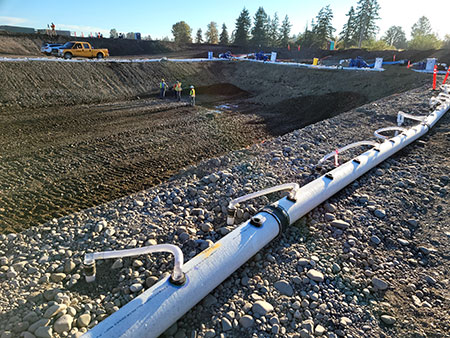
To perform the dewatering, rotary wellpoint pumps draw down groundwater across large excavations, preventing dangerous instability in the soil. Wellpoints are installed on close centers at the top of slopes on both sides of a large, open-cut excavation. Then, using the rotary wellpoint pumps, the system maintains a consistent drawdown so contractors can safely remove the old structure and install a new, fish-friendly box culvert.
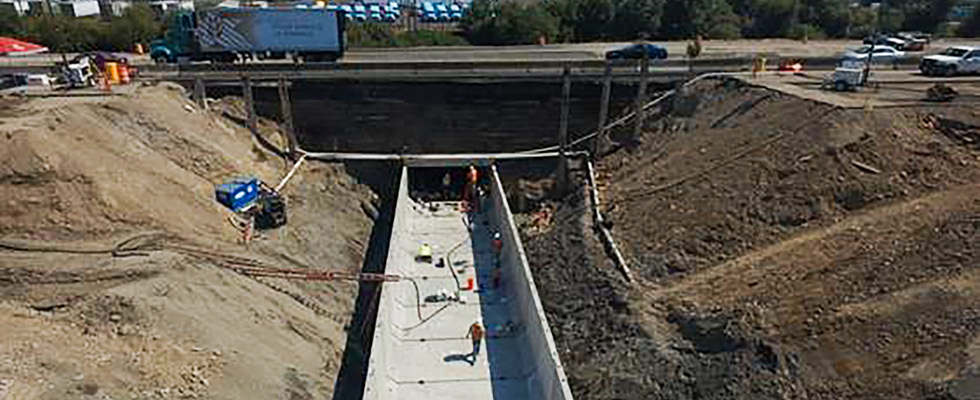
The engineering does not stop there. Wellpoint risers are often installed within the highway, fitted with protective covers and buried temporarily so traffic can pass over without damaging the integrity of the system. The risers then connect to a header pipe system and a pump that is strategically located on the shoulder of the road to keep the pumps accessible and out of the way.
Big Jobs, Big Systems
Over the past decade, there have been several large and logistically complex dewatering efforts in Washington’s fish passage program.
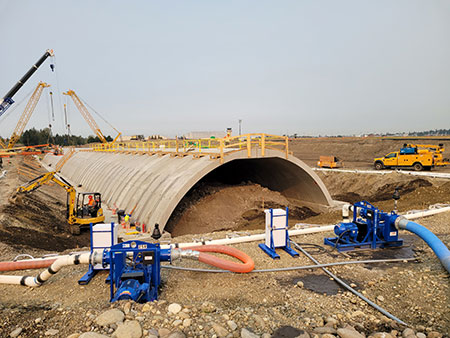
One standout effort was at Joint Base Lewis-McChord Airfield in Tacoma, Washington, in 2020. An 1,800-foot-long arch culvert on both sides of the runway needed to be dewatered—a massive job requiring 13 separate 12-inch rotary pumps running simultaneously. The setup kept groundwater in check for months, while crews worked under the runway.
The Stakes Are High
While much of the conversation around the culvert program focuses on budgets and deadlines, the real driver is the salmon. These fish are central to the culture, economy and ecology of the Pacific Northwest. For Native American tribes, salmon are more than a resource; they are a living link to heritage and identity. Blocked culverts do not just inconvenience salmon—they can wipe out entire runs by cutting fish off from the upstream habitat they need to spawn. Restoring those pathways is critical to reversing decades of decline.
Precision, Speed & Reliability
Working in the “fish window” adds pressure to every phase of a project. Crews often need to mobilize multiple pump systems in quick succession, running 24/7 operations to keep excavations dry so construction can stay on schedule.
Looking Ahead
With hundreds of culverts still to be replaced before the 2030 deadline, the Washington state fish passage program is one of the most ambitious environmental infrastructure efforts in the country, and it is far from over. Costs will likely continue to rise, and timelines will remain tight. For dewatering companies in the area, that means staying ready—expanding capacity, refining techniques and keeping their pumps in peak condition—as the companies continue to play a pivotal role in restoring vital salmon habitats and honoring the treaty rights of Native American tribes.